
You’ve introduced the thinking prompts. Your students recognize the emoji. You ask them to consider Multiple Perspectives, and someone helpfully announces, “That’s the glasses!”
Yes. Yes, it is.
Now, whose perspective are we considering, and how might it affect what they think?
That’s the part students sometimes need help with. They may remember the name of a thinking prompt before they’re comfortable using it. And even when they understand it during the introduction, they may need a reminder when they encounter it in a different subject.
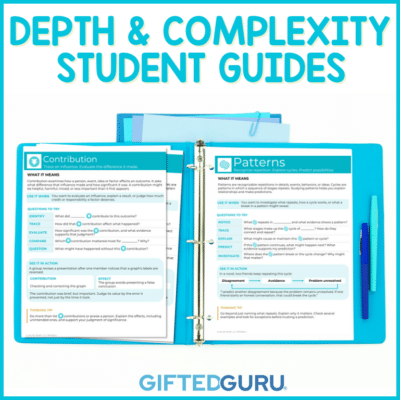
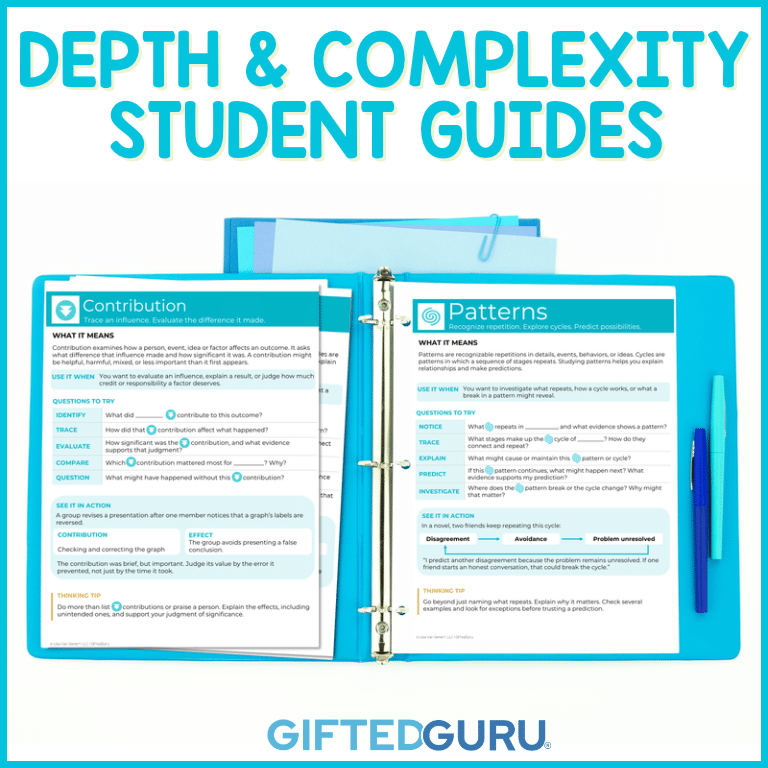
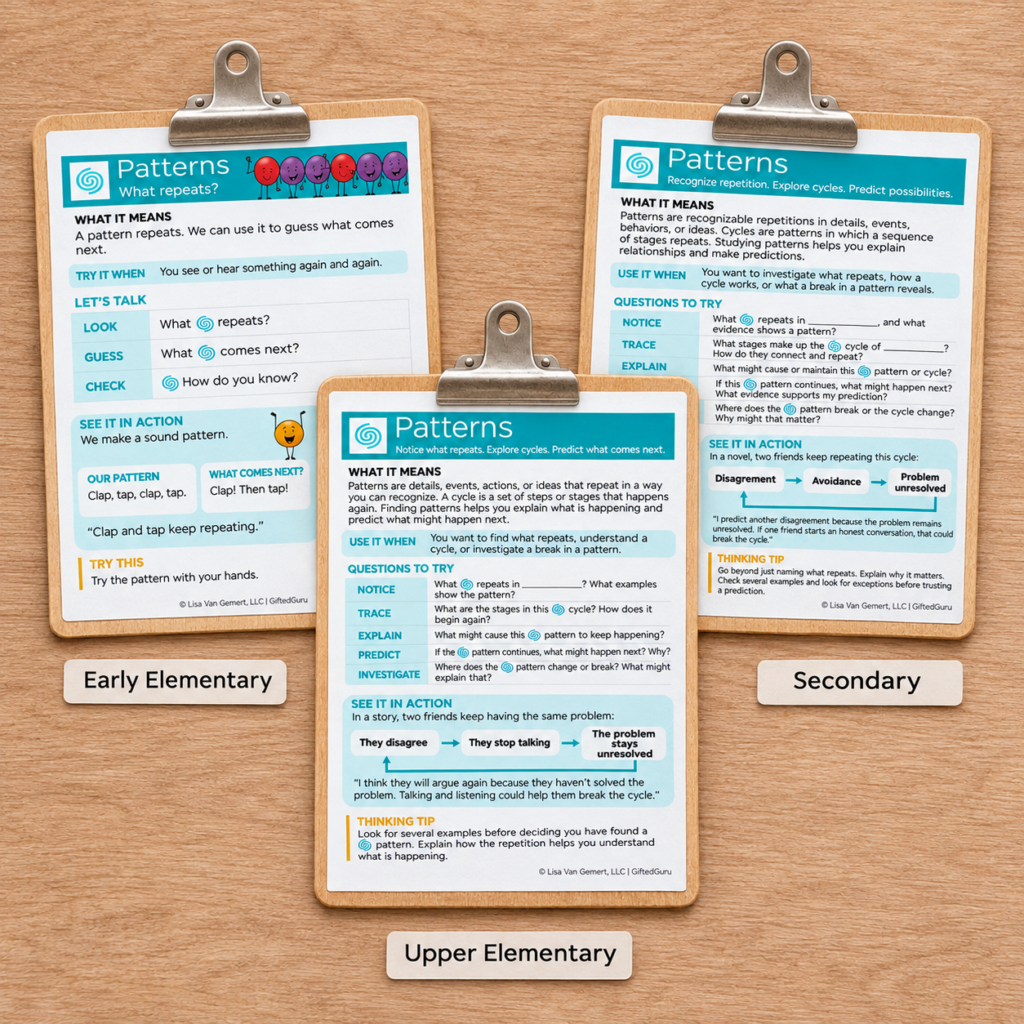
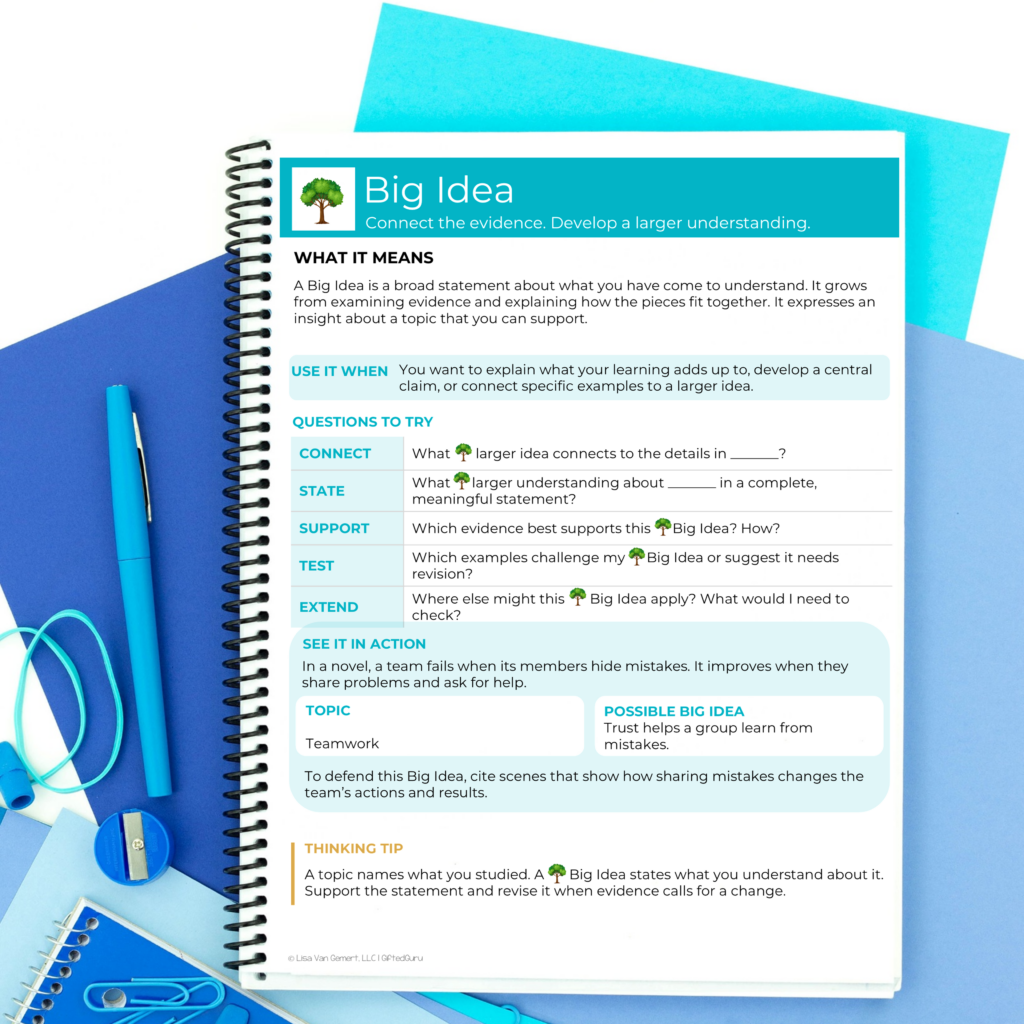
Teachers love the Depth & Complexity Quick Guide, and I decided to create Depth & Complexity Student Guides to give students something they can refer to while they’re doing that thinking. There are three versions, with language and examples suited to early elementary, upper elementary, and secondary learners.
Let me show you what’s in them and how I suggest using them.
What’s in the Depth & Complexity Student Guides?
Each version includes:
- Eleven individual thinking prompt guides
- Five individual Content Imperative guides
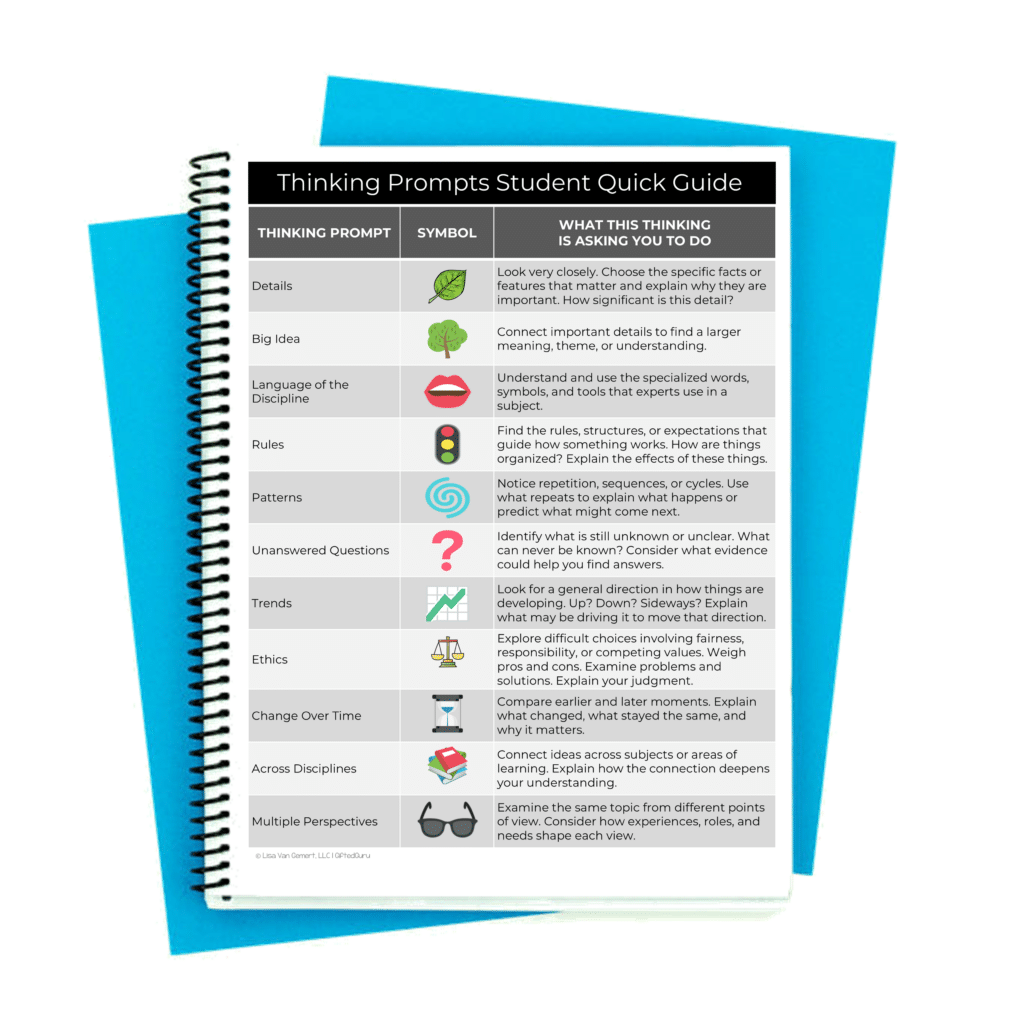
- Two student quick-reference sheets
- Teacher notes and instructions
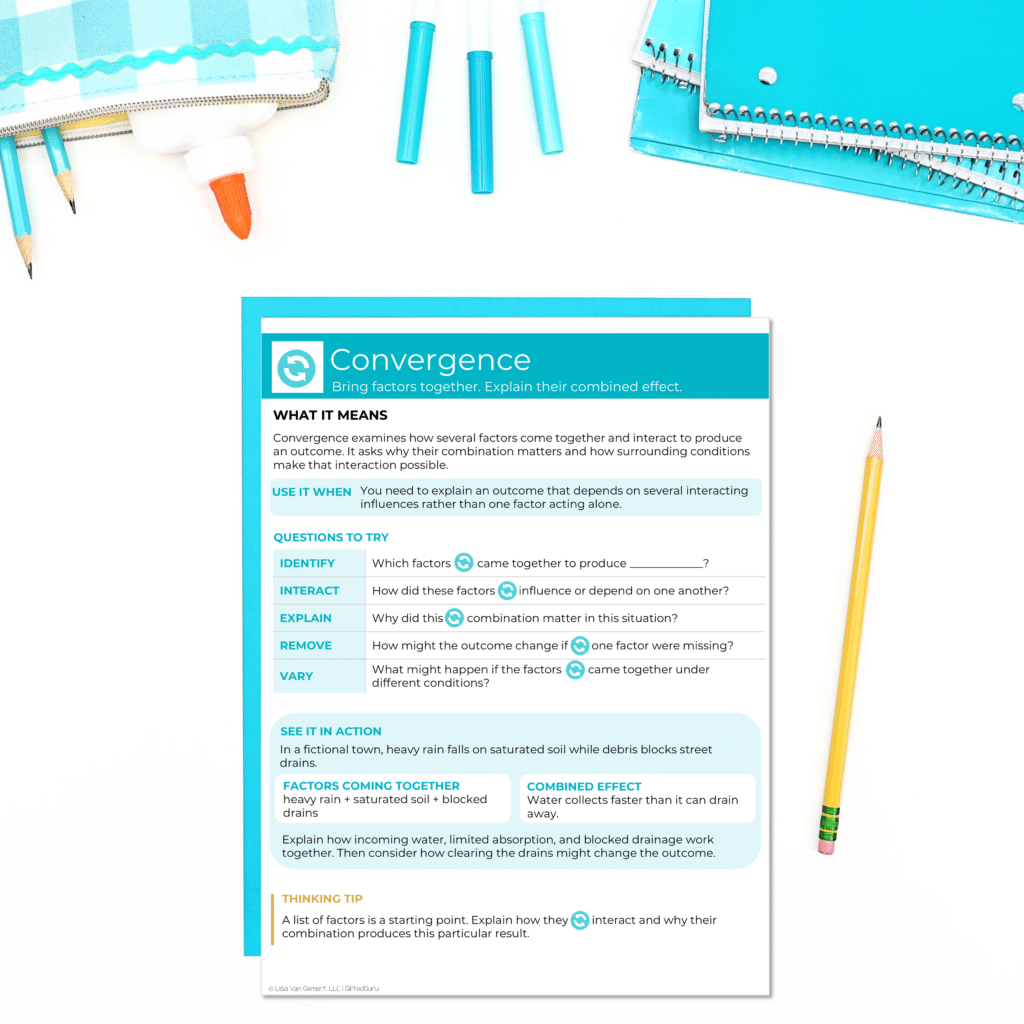
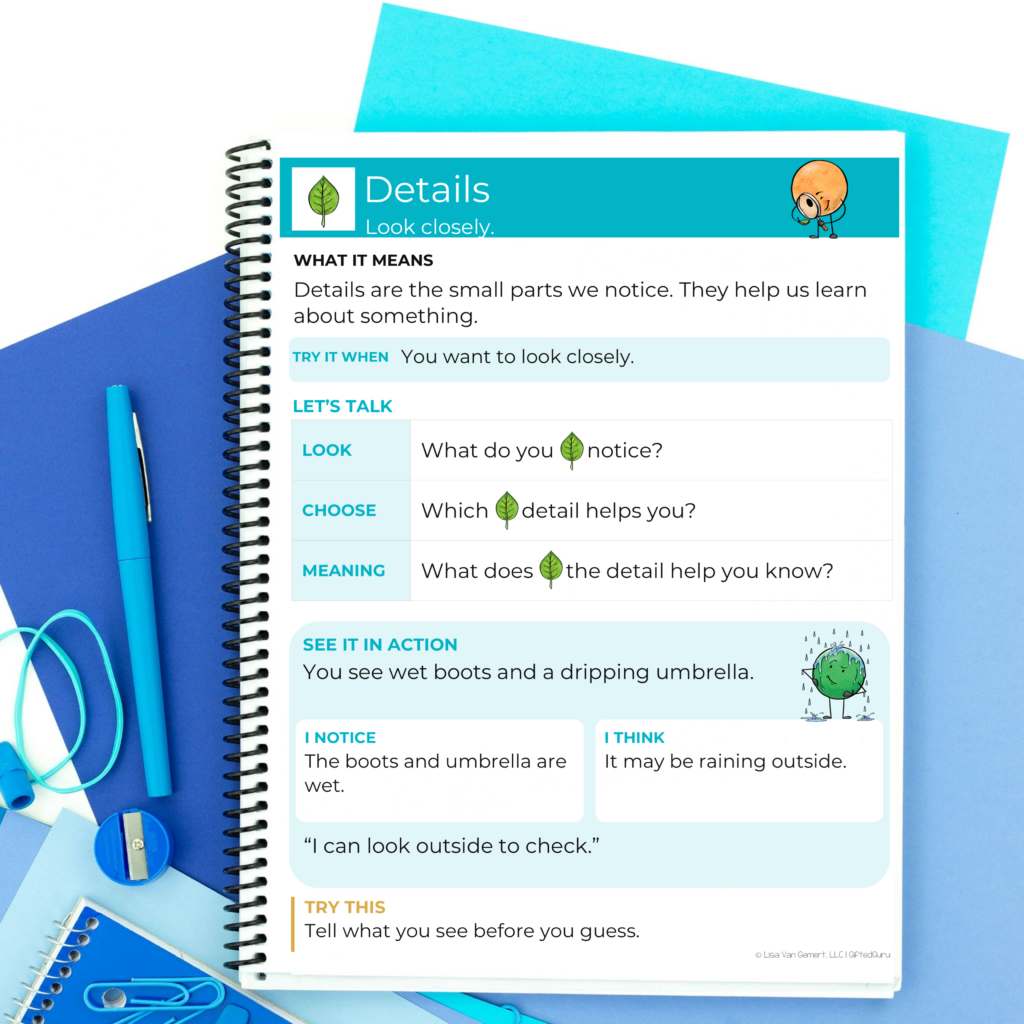
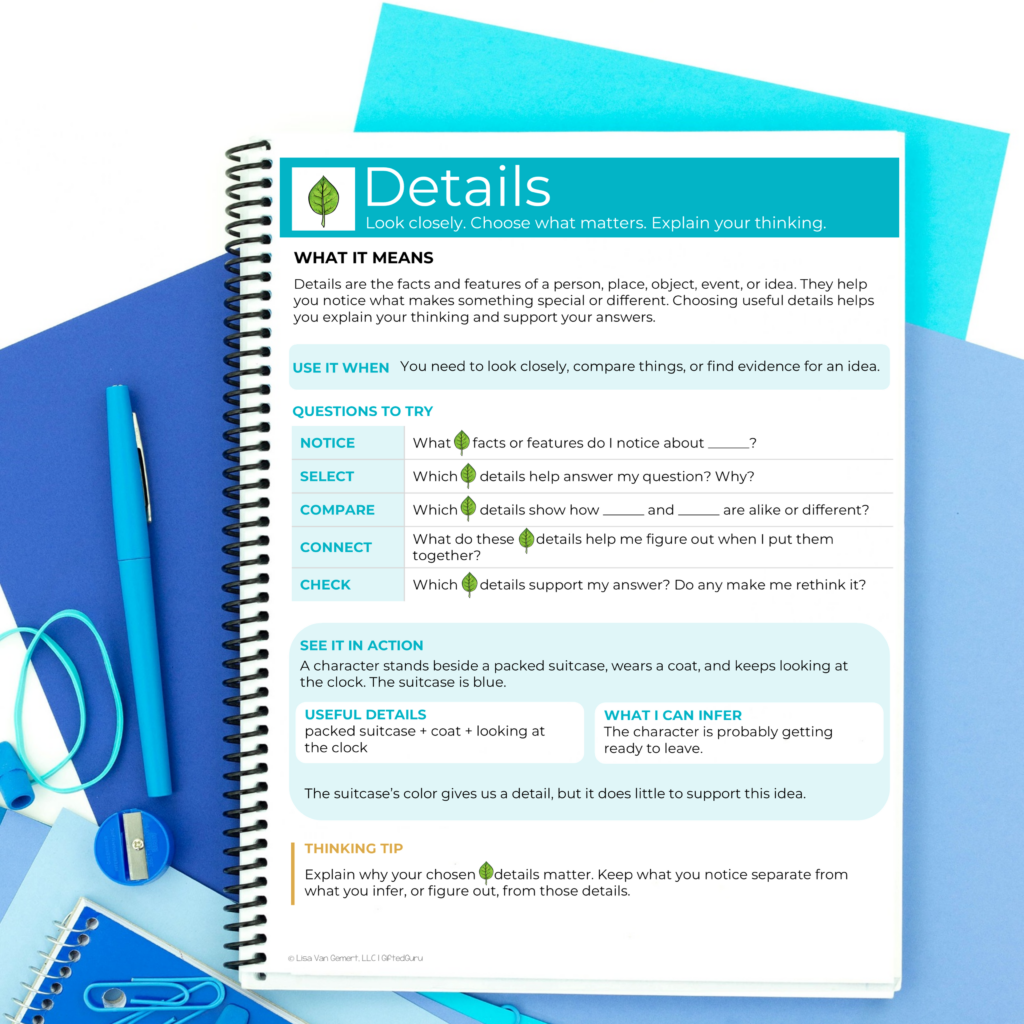
Each individual guide includes a student-friendly explanation, question stems, examples, and a thinking tip. Students can use these to remind themselves what a prompt means and consider how it applies to the content they’re studying.
The quick-reference sheets are useful when students need a brief reminder or want to choose a prompt for themselves. The individual pages give them more help with a particular prompt.
You can keep the guides in student notebooks or folders, or have a few copies available where students work. You don’t have to distribute everything at once. In fact, I’d begin with the guide for a prompt you’re already using.
How I Would Use the Guides in Class
Simply handing students a reference sheet rarely accomplishes everything we hope it will. We have to show them how to use it.
Here are a few ways to work the guides into lessons you’re already teaching.
Use a Guide While You Model Your Thinking
Choose a prompt that fits your lesson and have its guide available as you think aloud.
For example, if you’re using Multiple Perspectives during a history lesson, you might say:
“Let’s look at the guide together. We’ve considered how the settlers described this event. Whose perspective haven’t we considered? What might those people have wanted us to understand?”
Let students hear how you use the guide to decide what to ask next. That gives them an example to follow when they work on their own.
Help Students Develop an Answer
Sometimes students give an answer that’s accurate but doesn’t go very far.
Ask them to look for Patterns, and they might say, “It repeats.”
Okay. What repeats? Where do we see it? What might explain the repetition?
Have students consult the guide and choose a question that helps them say more. Give them time to discuss it with a partner before returning to the whole-group conversation.
That little bit of preparation can make it easier for more students to contribute something worth discussing.
Keep a Guide Nearby During Independent Work
If you’ve asked students to use a particular thinking prompt in their writing, make sure they have access to its guide while they work.
A student writing about Ethics may need to revisit what makes a question an ethical question. A student using Across Disciplines may need help explaining how knowledge from another subject contributes to understanding the topic.
Encourage students to check the guide when they get stuck. We want them to become comfortable finding and using the help available to them.
Let Students Choose a Thinking Prompt
Once students know several prompts, try giving them some choice.
After reading a text or completing a lesson, ask:
“Which thinking prompt would help us explore this further? Explain your choice.”
Students can use the quick-reference sheet to consider their options, then turn to an individual guide to develop a question.
I especially like asking students to explain why they chose a prompt. Their explanation can tell you quite a bit about their understanding.
Which Version Should You Choose?
I made three versions because the explanations and examples that work for a first grader aren’t necessarily what you’d put in front of a high school student.
The grade ranges give you a starting point. Take a look at the sample pages and consider how much reading support your students will need and which examples will make sense to them.
Early Elementary: K–2
The K–2 Student Guides use simple language and familiar examples to help young learners talk about their thinking.
With this age group, I would introduce a page together and return to it during conversation. You can read a question aloud, connect it to a story or classroom experience, and give students time to respond.
Young students can have wonderful discussions about fairness, perspectives, and other sophisticated ideas. We need to give them language they can use to participate.
✅ Take a look at the K–2 Depth & Complexity Student Guides.
Upper Elementary
The Upper Elementary Student Guides are designed for approximately grades 3–5/6, with explanations and examples suited to students in that range.
Try keeping the guides in a notebook students can reach during reading, science, social studies, or math. Refer to them together often enough that students become familiar with what’s there.
When you ask students to use a prompt, you can also ask which question or reminder from the guide helped them.
✅See the Upper Elementary Student Guides here.
Secondary
The Secondary Student Guides give older students explanations and examples suited to their age.
Older students may still be new to Depth & Complexity, and they deserve a clear introduction and useful reminders. Familiarity with the name of a prompt can also hide some shaky understanding of how to apply it.
Use a guide during a discussion, while students plan an essay, or as they develop questions for a seminar. If a response seems superficial, have students revisit the guide and consider what they could investigate further.
✅ See the Secondary Student Guides here.
Yes, the Content Imperatives Are Included!
Each set also includes guides for Origin, Contribution, Convergence, Parallel, and Paradox.
If you haven’t used the Content Imperatives much, you can learn about one alongside your students. Choose one that fits what you’re teaching and work through an example together.
Origin, for example, can help students investigate how something began. During a study of an invention, students could consider the need or problem that led to its development and the conditions that made it possible.
There’s no need to introduce all five in one sitting. Give students time to become familiar with each one and find opportunities to use it again.
Need Help Introducing the Thinking Prompts?
If your students are new to Depth & Complexity, I also have introductory lessons with activities designed to help them experience the thinking each prompt asks them to do.
You can find the options for your students here:
- Introducing Depth & Complexity to K–2 students
- Introductory lessons for grades 3–6
- Introductory lessons for grades 7–12
You can use a student guide during an introductory lesson, then keep it available as students encounter the prompt in their other work.
What If You’re Learning Depth & Complexity, Too?
You’re welcome to learn along with your students! Reading through a guide and planning an example can help you clarify your own understanding.
If you’d like more support, my Depth and Complexity course offers a fuller explanation of the framework and how to use it in your teaching.
And if you already have a prompt planned for tomorrow’s lesson, try this: put its guide where students can see it, read one useful question together, and give them time to think about it.
After students respond, ask, “Who can build on that idea?”
Keep the guide handy as the conversation develops. You may find students referring to it without a reminder from you, which is a pretty good reason to leave it within reach!