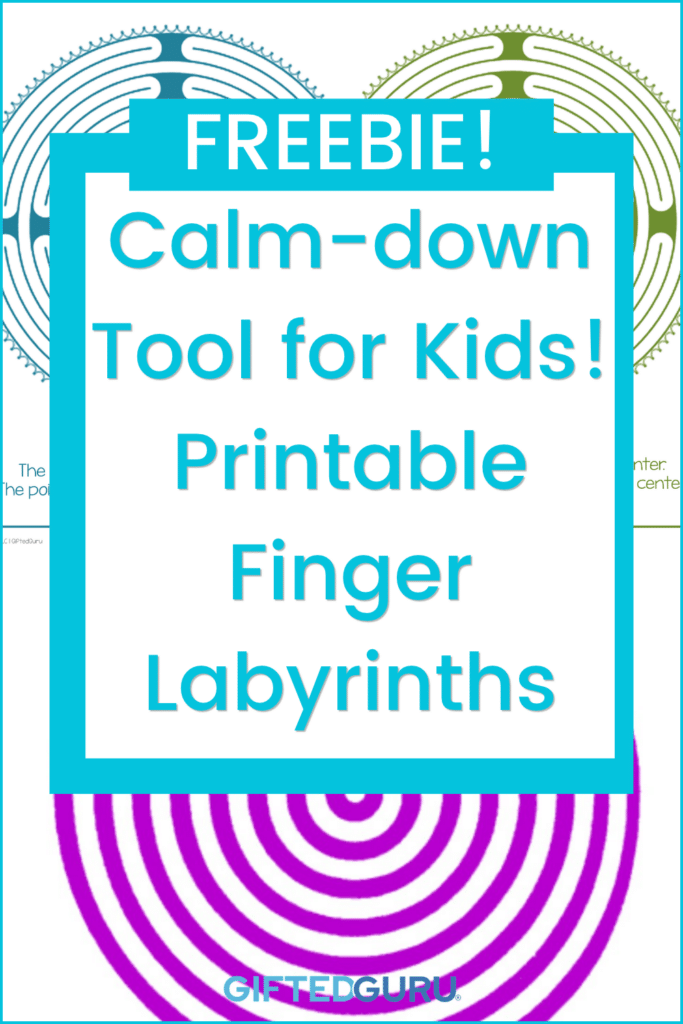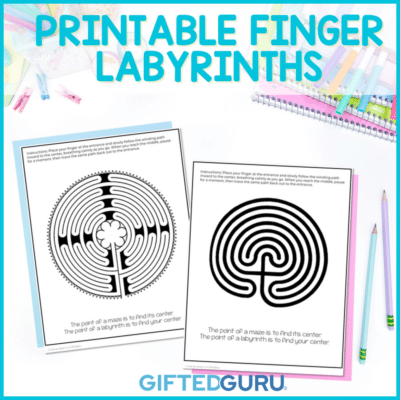

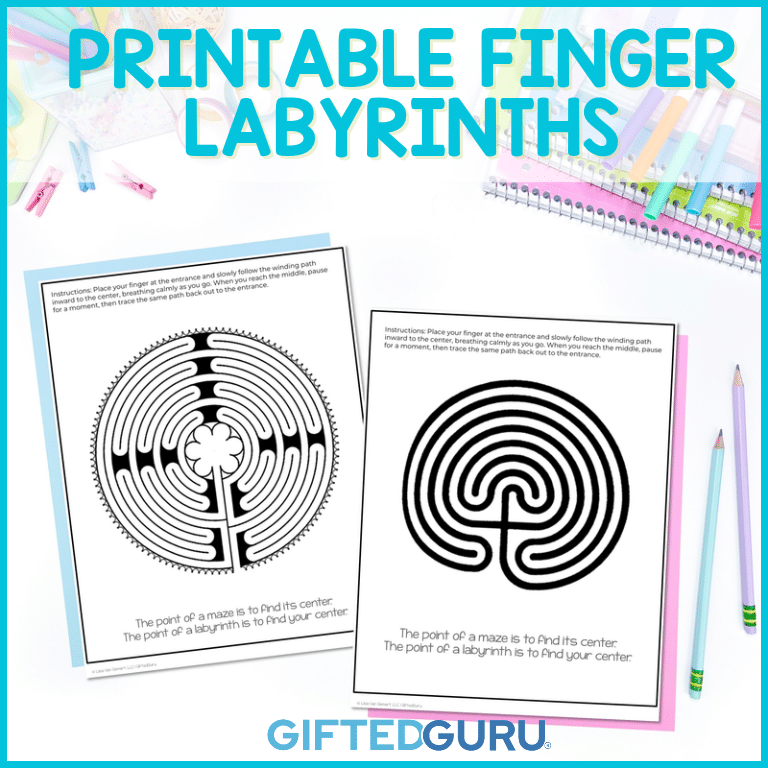
Finger Labyrinths: A Tiny Reset for Big Brains
Every teacher knows the moment. The energy in the room has gone sideways, someone is crying over a pencil, and a student who finished early is now “helping” everyone else not finish.
What if you had a one-minute reset that didn’t require a lesson plan, a budget, or a whistle?
Enter the finger labyrinth.
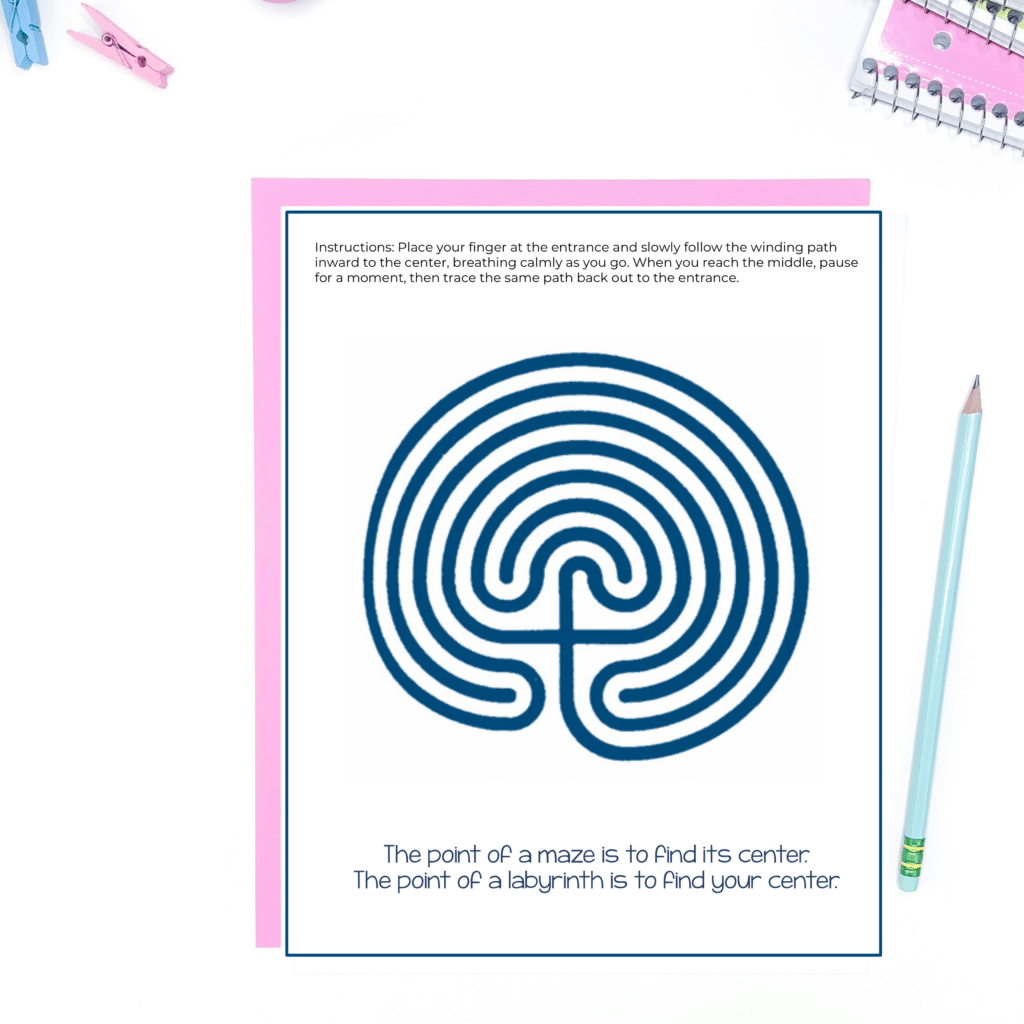
A labyrinth is not a maze. A maze is a puzzle with dead ends and wrong turns. A labyrinth has one path, in and out, and no decisions to make. You just follow it with your finger. That’s the whole activity, and that’s the point.
1. It gives busy brains one simple job.
Gifted kids (and gifted teachers, let’s be honest) often have a dozen tabs open in their minds at all times. Tracing a labyrinth gives the brain something small and steady to do. There’s nothing to win and nothing to get wrong.
2. It’s a calm-down tool that doesn’t feel like one.
Some kids bristle at “take a deep breath.” Tracing a path with a finger feels more like an activity than an intervention. Slow tracing and slow breathing pair nicely, and you never have to announce that you’re doing either.
3. It works at every transition.
Try one:
- as students come in from recess or lunch
- before a test (for the kids who vibrate with anxiety)
- during early-finisher time
- when a student needs a quiet break without leaving the room
4. It works for you, too.
Keep one on your desk. Trace it while you wait for the copier, between classes, or after that parent email. Nobody has to know you’re regulating your nervous system. (Teachers need special things, too!)
I actually taught someone how to draw one when I was seated next to a nervous flyer on a plane!
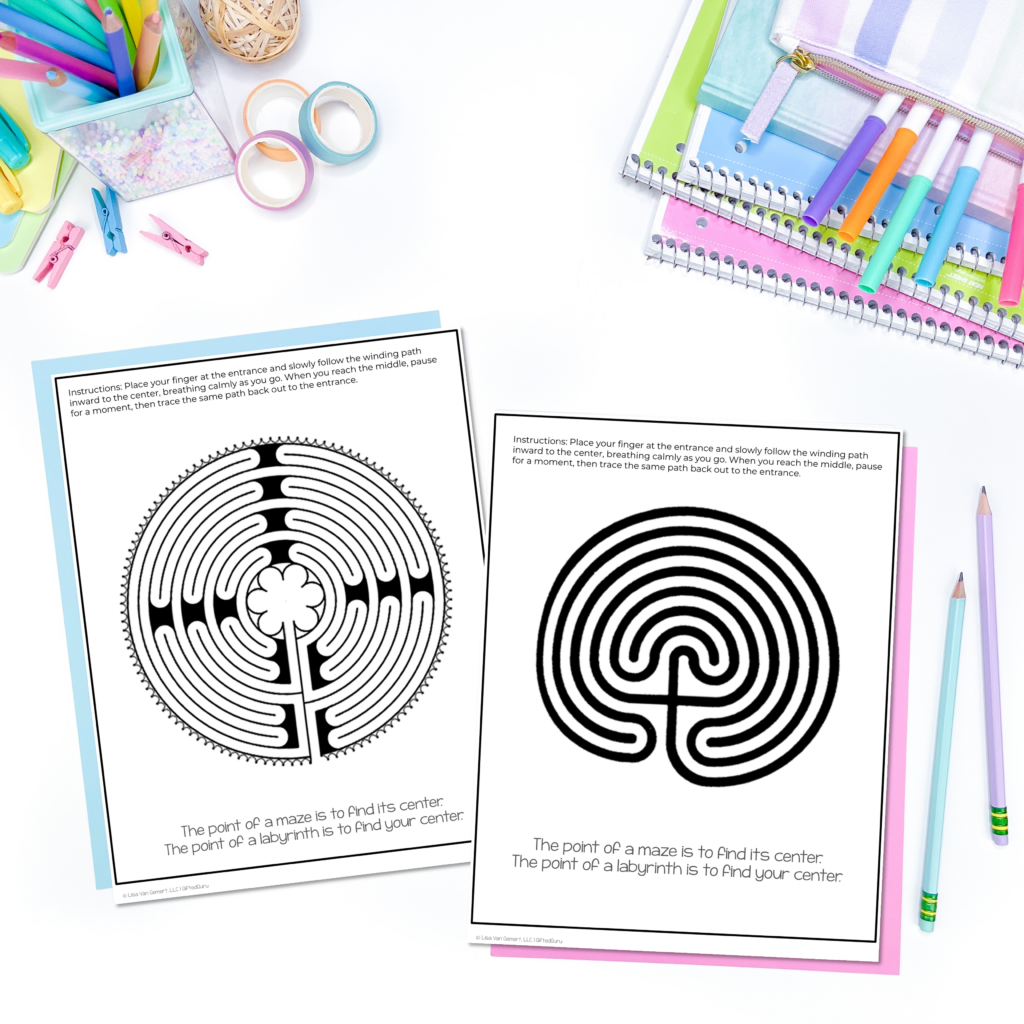
Once they’re calm, then what?
Once they’re calm, then what?
A labyrinth gets a student to a calmer place. It doesn’t teach them what to do with the big feelings that got them upset in the first place. That’s where a little conversation comes in.
If you want an easy next step, my Social Emotional Learning Activities: Discussion, Writing Prompts, and Task Cards are ready to go. They’re a quick, low-prep way to get students talking and writing about their feelings, and they cost less than a boring coffee. Trace the labyrinth, then pull a card.
If you’re ready to go deeper
Maybe you’re realizing that the emotional outbursts, the perfectionism paralysis, and the “I don’t care” shrug aren’t one-time problems. They’re patterns, and gifted kids come by them honestly.
If that’s your classroom (or you’re just tired of PD that’s all theory and no action), I created a six-hour course called Social and Emotional Needs of the Gifted. You’ll learn about intensities, perfectionism, motivation, and emotional intelligence, with strategies I’ve used with real students in a real classroom. It comes with bonus printables, monthly office hours where you can ask me questions, and a certificate for six hours of PD credit.
Start with the labyrinth. Add the cards if you want more. And if you’re ready for the whole picture, the course is waiting.
A few last tips: introduce the labyrinth as a choice, never a punishment, and let students use it without talking about it. If a child is consistently overwhelmed, a labyrinth is a nice support, but it isn’t a substitute for talking with the family or your counselor about what’s going on.
[Download the free labyrinths here.]
~ Lisa